


Your website is often the first impression a potential customer gets. For many businesses, that impression comes from a ready-made theme: quick to set up and affordable, but shared with thousands of other sites. At first it works fine. Then the business grows, and the limits show up. Pages slow down, the design looks familiar, and a feature you need turns out to be impossible without a stack of plugins.
Custom WordPress development takes a different route. Instead of adapting your business to a theme, a developer builds the site around your brand, your workflows, and your goals. This guide explains what that involves, the 10 biggest benefits, when a template is still the smarter choice, and how to pick the right development partner.
What Does “Custom WordPress Development” Actually Mean?

Custom WordPress development means building your site’s design, structure, and functionality specifically for your business, rather than customizing a pre-made theme. Depending on the project, that can include:
- A custom-coded theme designed from scratch
- Purpose-built plugins for features that don’t exist off the shelf
- Unique user journeys, such as onboarding flows or client portals
- Integrations with your CRM, payment gateway, booking system, or internal tools
The difference is mostly about architecture. A template hands you a finished look and asks you to adapt around it. A custom build starts with what your business needs and works backward from there.
Why More Businesses Are Choosing Custom
As websites become central to sales and lead generation, owners want more control. A tailored site helps you:
- Stand out in a crowded market
- Load faster and perform better
- Build a stronger foundation for search rankings
- Add advanced features as your needs change
- Grow without outgrowing your platform
The 10 Benefits
1. A Design That Is Truly Yours
Popular themes get reused again and again, and visitors can sense it. A custom design is shaped around your brand identity, with layouts, spacing, colors, and interactions chosen deliberately. It signals professionalism before a visitor reads a single sentence. Think of a tailored suit versus an off-the-rack one: both cover the basics, but only one is made for you.
2. Faster Load Times
Many themes ship with dozens of features you will never use, and every one adds code the browser has to process. A custom build includes only what the site needs. With fewer plugins competing for resources, pages load quicker and interactions feel smoother. Visitors rarely praise speed, but they leave quickly when it’s missing.
3. A Stronger SEO Foundation
Search engines look at structure, clarity, and performance. Custom development lets you build these in from the start: clean code, logical heading hierarchy, sensible URL structures, and optimized loading behavior. SEO still demands ongoing content and link-building work, but you begin on solid ground instead of fixing technical problems later.
4. A True Mobile-First Experience
Most web traffic now comes from phones, yet many sites still feel like desktop pages squeezed onto a small screen. A custom build can be designed around mobile behavior from day one, with navigation, button sizes, and spacing planned for thumbs rather than mouse clicks. Visitors zoom, pinch, and squint less, and that usually means more conversions.
5. Greater Security Control
In WordPress, security often depends on how many moving parts you add. Every extra plugin is another piece of code that needs updates and could contain a vulnerability. Custom builds usually rely on fewer third-party dependencies, which shrinks your exposure. No site is invincible, but a lean, purpose-built codebase is easier to audit and maintain.
6. Room to Scale
Businesses change, and websites are expected to keep pace. A custom site is built with growth in mind, so new pages, features, and integrations can be added without breaking what already works. It’s like building a house with space for future rooms already planned, even if you don’t construct them right away.
7. Features That Fit Your Operations
Not every business fits a standard mold. A clinic may need appointment booking, an online store may need advanced product filters, and a training company may need student dashboards. With custom development, these requirements are built properly instead of forced into a theme that wasn’t designed for them. The gap between “close enough” and “built for us” becomes obvious as you scale.
8. Smoother User Experience
Good UX is about flow: how naturally someone moves from landing on your page to taking action. In a custom build, every element has a reason to be there, and nothing is included just because it came with the template. Visitors tend to trust sites that feel coherent, even when they can’t explain why.
9. An Easier Editing Experience
A well-built custom site gives your team a cleaner dashboard that shows only what they need. Editors can update content, add pages, or publish posts without wading through confusing settings. That means faster updates, fewer mistakes, and less reliance on a developer for everyday tasks.
10. Better Value Over Time
Custom development costs more upfront, and that concern is fair. But over a few years the numbers often shift. You pay for fewer plugin subscriptions, spend less on patch-up maintenance, and avoid frequent redesigns caused by a site that outgrew its template. The savings come from reduced friction over time, not from a lower first invoice.
Custom vs. Template Websites at a Glance
| Factor | Custom Development | Template-Based |
|---|---|---|
| Design | Unique to your brand | Shared with other sites |
| Speed | Optimized for your needs | Often carries extra code |
| SEO | Built into the structure | Depends on the theme |
| Security | Fewer dependencies | Varies by theme and plugins |
| Scalability | Designed to expand | Often limited by the theme |
| Upfront cost | Higher | Lower |
| Time to launch | Longer | Faster |
When a Template Is Still the Right Choice
Custom isn’t automatically better for everyone. A good template can be the smarter move if:
- You’re launching a simple site, like a portfolio or small brochure site
- Your budget is tight and you need to go live quickly
- You’re testing a business idea and may change direction soon
- You don’t need special features beyond standard pages and a contact form
Many businesses start with a template and move to a custom build once the site becomes a serious revenue channel. That’s a perfectly reasonable path.
Who Benefits Most from Custom WordPress Development?
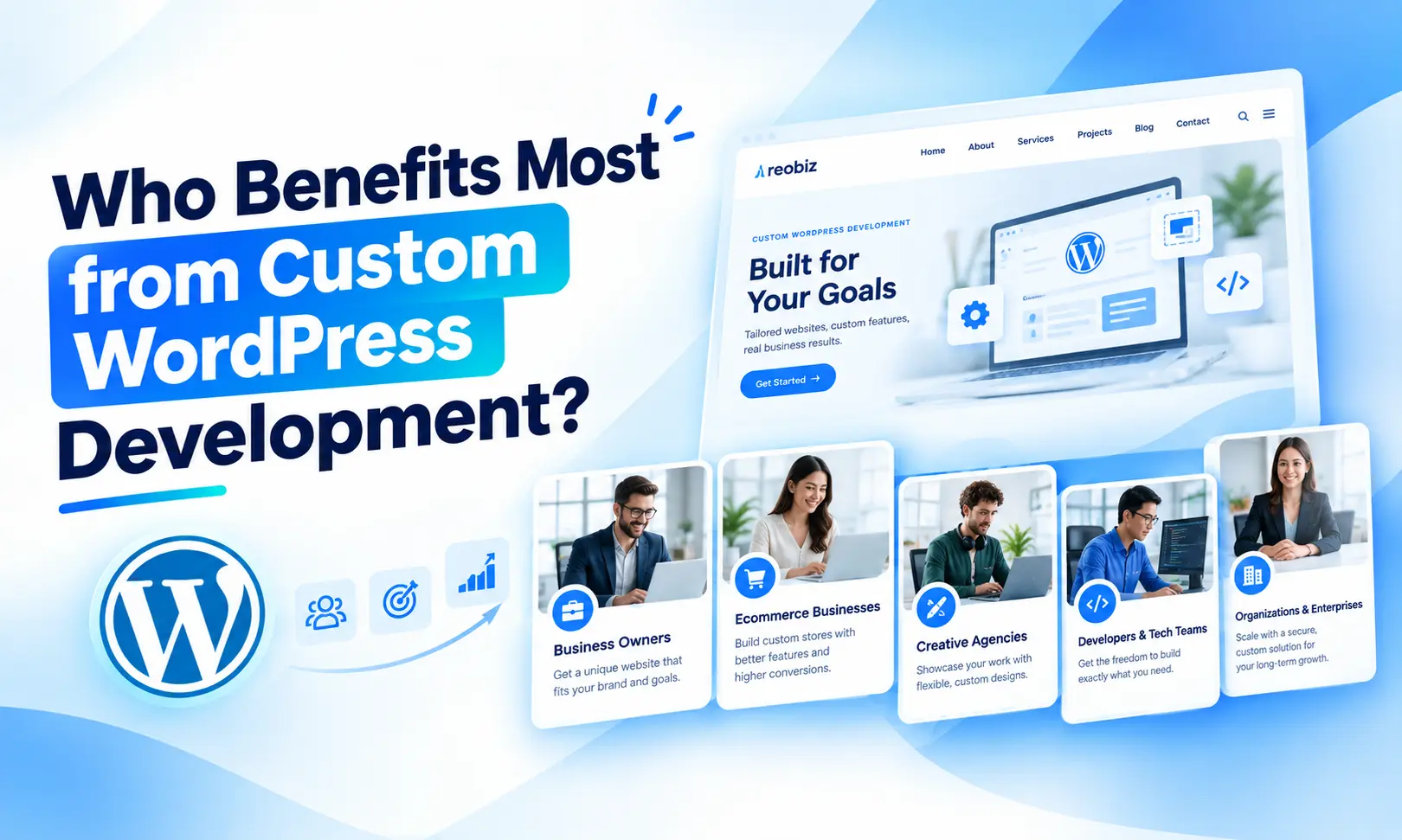

Businesses that rely heavily on branding, performance, or complex functionality see the biggest return:
- Growing service companies that depend on lead generation
- Agencies managing multiple client websites
- SaaS platforms with product pages, documentation, and onboarding
- eCommerce brands with unique buying flows
- Education and membership sites with gated content
For these businesses, a custom site works less like a luxury and more like core infrastructure.
How to Choose the Right Development Partner
The quality of the result depends heavily on who builds it. Before you hire, check these points:
- Portfolio: Look for projects similar to yours in size and complexity.
- Process: A good team asks questions about your goals before they talk about design.
- Performance focus: Ask how they handle speed, caching, and clean code.
- Security practices: They should be able to explain how they handle updates, backups, and vulnerabilities.
- Support: Find out what happens after launch, including maintenance and bug fixes.
- Transparency: Clear timelines and itemized pricing are signs of a reliable partner.
Frequently Asked Questions
How long do custom WordPress development services take?
Simple custom sites can take 4 to 8 weeks. Larger projects with complex features or integrations may take several months, depending on scope and how quickly feedback is given.
Are custom WordPress development services always more expensive?
Upfront, usually yes. Over time, though, reduced plugin costs and fewer redesigns can narrow the gap.
Can I edit a custom site myself?
Yes. A well-built custom site is designed to make content updates easy for non-technical users.
Will custom WordPress development services guarantee better rankings?
No. A strong technical foundation helps, but rankings also depend on content quality, backlinks, and ongoing optimization.
Can I move from a template to a custom site later?
Absolutely. Your content can usually be migrated, and many businesses upgrade once their needs outgrow the original theme.
What do custom WordPress development services usually include?
Most projects cover planning, custom design, theme and plugin development, third-party integrations, testing, and launch. Many agencies also offer post-launch support and training for your team.
Are custom WordPress development services suitable for small businesses?
Yes, if the website plays a real role in generating leads or sales. Small businesses with specific needs, like bookings or custom quote forms, often benefit more than those who only need a basic online presence.
Is a custom WordPress site more secure than a template-based one?
Often, yes. Custom builds usually depend on fewer third-party plugins, which reduces potential weak points. Regular updates, backups, and security monitoring are still essential.
Do I need maintenance after my site goes live?
Yes. WordPress core, plugins, and server environments all need regular updates. Many providers of custom WordPress development services offer monthly maintenance plans that include backups, security checks, and performance monitoring.
How do I choose the right provider for custom WordPress development services?
Review their portfolio for projects similar to yours, ask about their process and security practices, and confirm what support is included after launch. Clear timelines and transparent pricing are also good signs.
Final Thoughts
Custom WordPress development isn’t necessary for every project, and a simple site may do perfectly well on a template. A small portfolio or a short-term campaign page rarely needs a fully tailored build, and spending heavily there would be hard to justify. But if your goal is to grow, compete, and be remembered, the benefits add up quickly.
A custom site changes more than how your business looks. It affects how your site performs under heavy traffic, how easily it scales as you add products or services, and how it feels to every visitor who lands on it. Faster pages, a cleaner structure, tighter security, and features built around your real workflows all work together to support your bottom line. Over time, custom WordPress development also saves you from the cycle of patching plugins, fighting theme limits, and rebuilding from scratch every few years.
If you’re deciding, start by listing the features and goals a template can’t meet. Think about the integrations you need, the user journeys you want to improve, and the places where your current site slows your team down. That list will usually tell you whether custom WordPress development is worth the investment. And if the list keeps growing, it’s probably a sign that your business has already outgrown its template.